Sous
Reducing household food waste through AI & smart pantry tracking.
Product Strategy
Prototyping
overview
How do we help people stop wasting food they forgot they had?
Originally a personal project, I kept forgetting about food in my fridge until it spoiled. Turns out, this is a massive problem.
problem
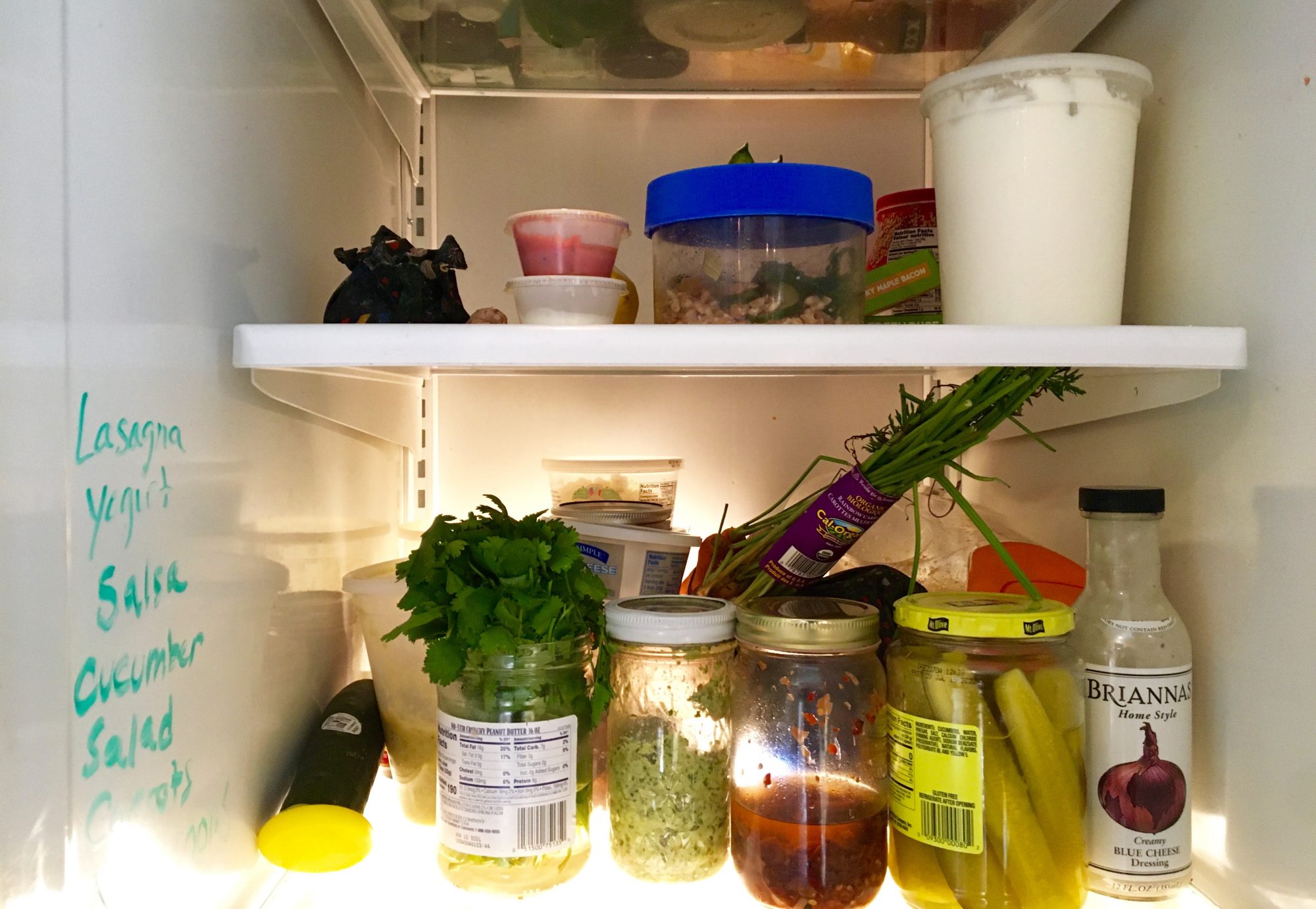
People are wasting food. They only realize it when they clean out their pantry & fridge. The hidden cost: $1,800/year
74% of people forget what's in their fridge, and US households waste an average of $1,800 per year on groceries that spoil.
The core issue: people forget what they have, so perfectly good food spoils.
solution
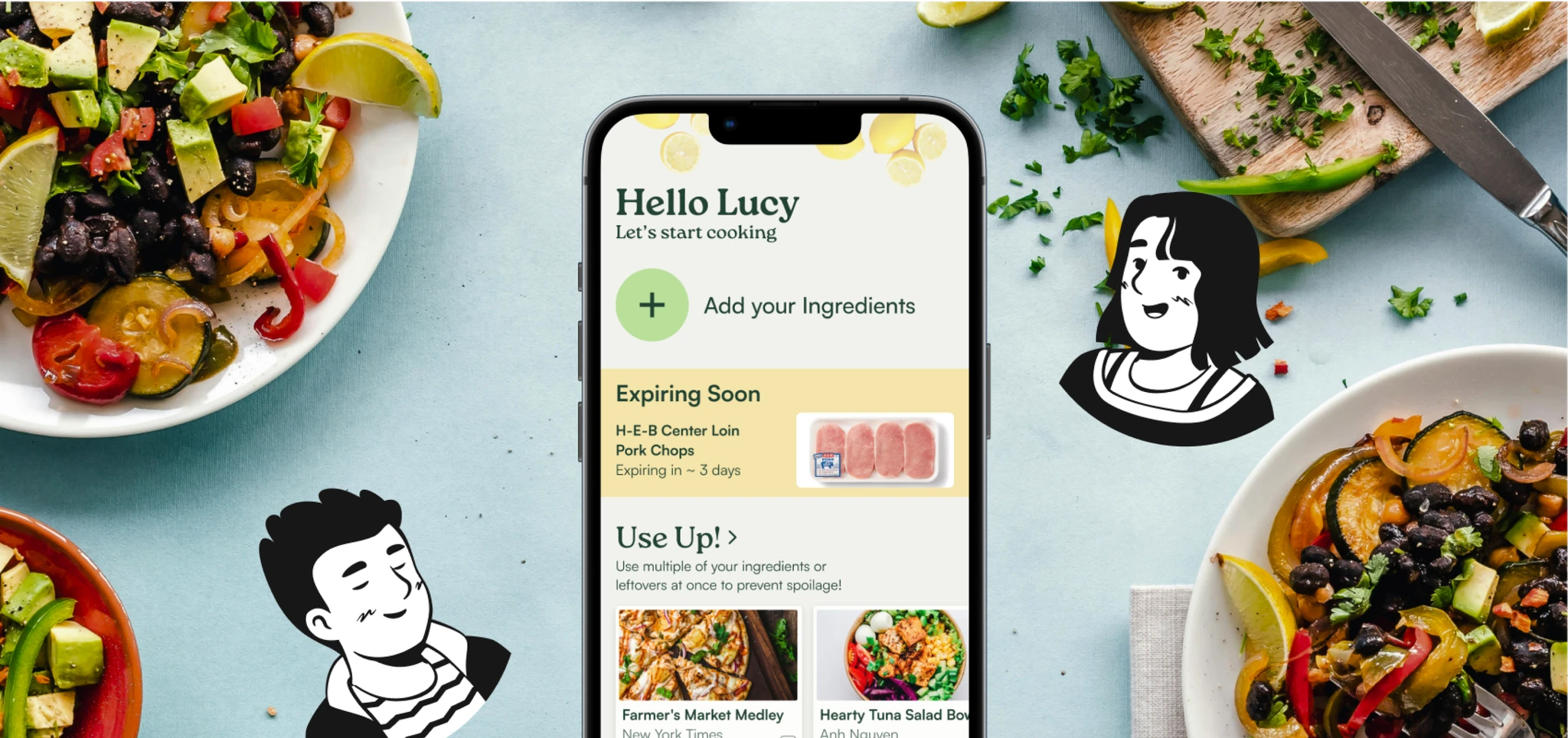
Sous: scan, track, cook with what you have, while seamlessly tracking what's going bad
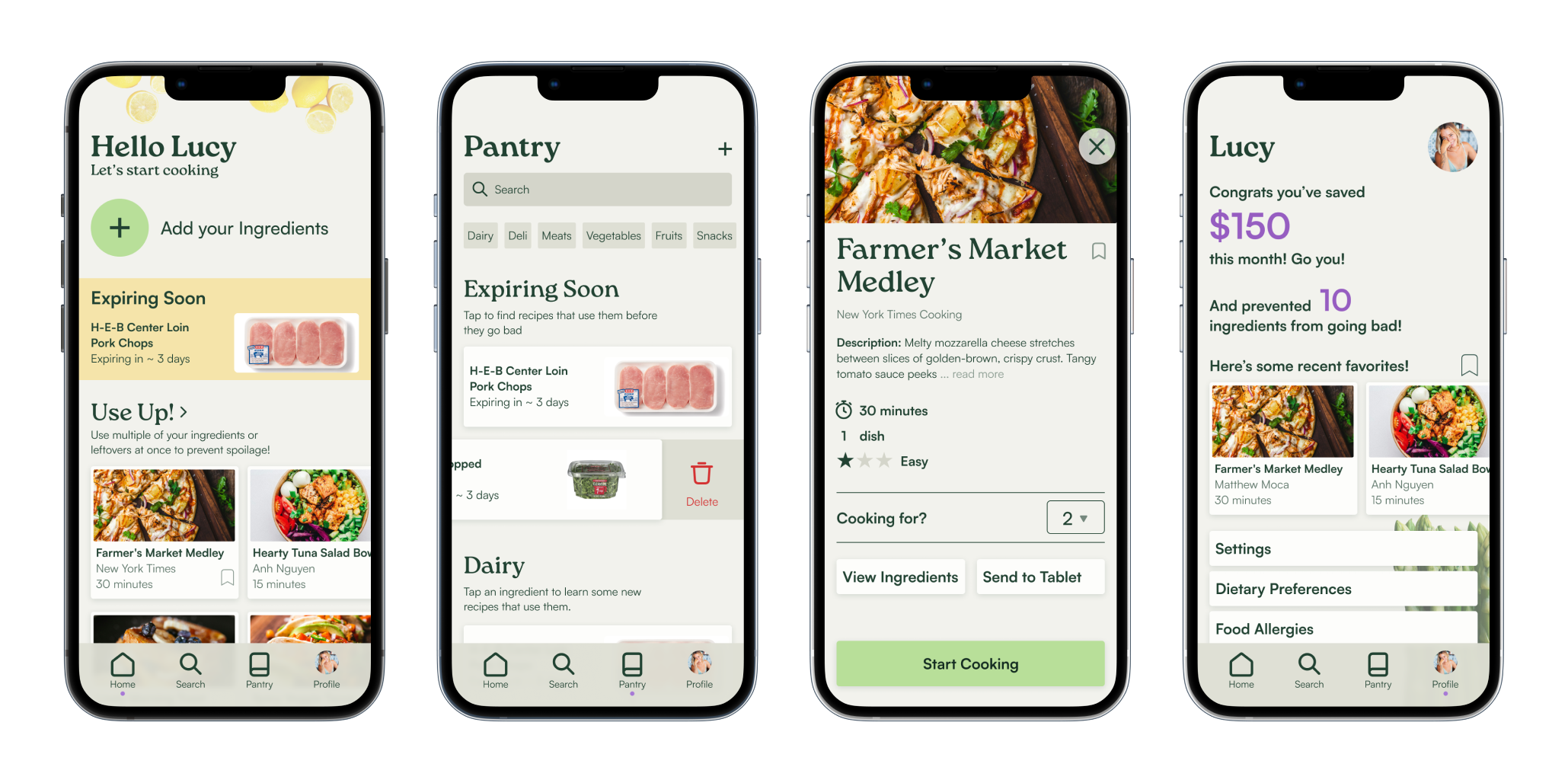
A pantry tracking app that scans groceries, monitors expiration dates, and suggests personalized recipes prioritizing ingredients near spoilage.
opportunity
Meeting people where they are
Research revealed that traditional solutions wouldn't work:
Meal planning fails
90% of surveyed users didn't plan meals in advance. We can't expect behavioral change.
Forgetfulness is universal
74% considered forgetting fridge contents their biggest struggle.
Recipe discovery is broken
Users struggle to find recipes that match ingredients they already have.
core features
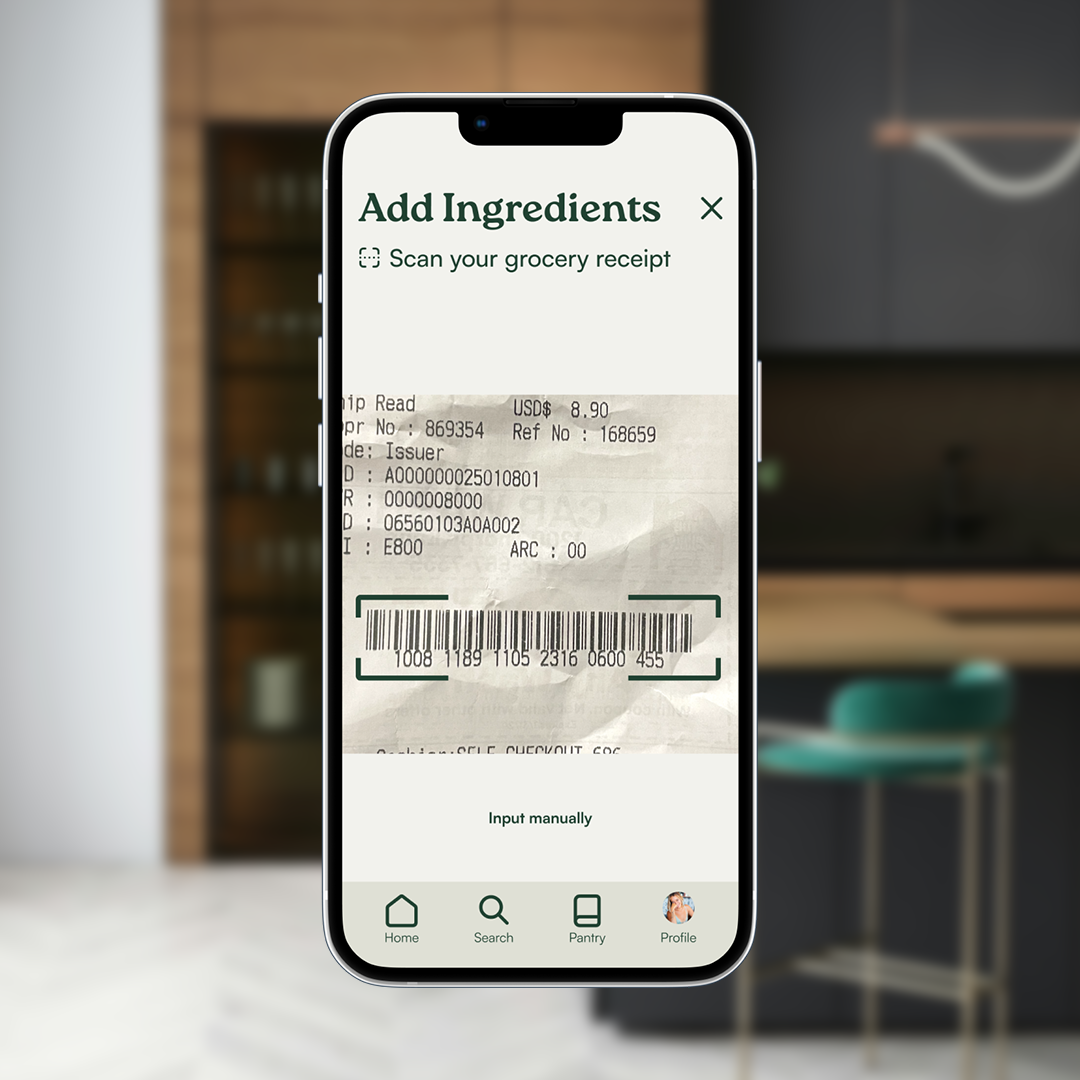
Easily scan grocery store receipts to store all ingredients
AI-powered scanning automatically categorizes and tracks expiration dates.
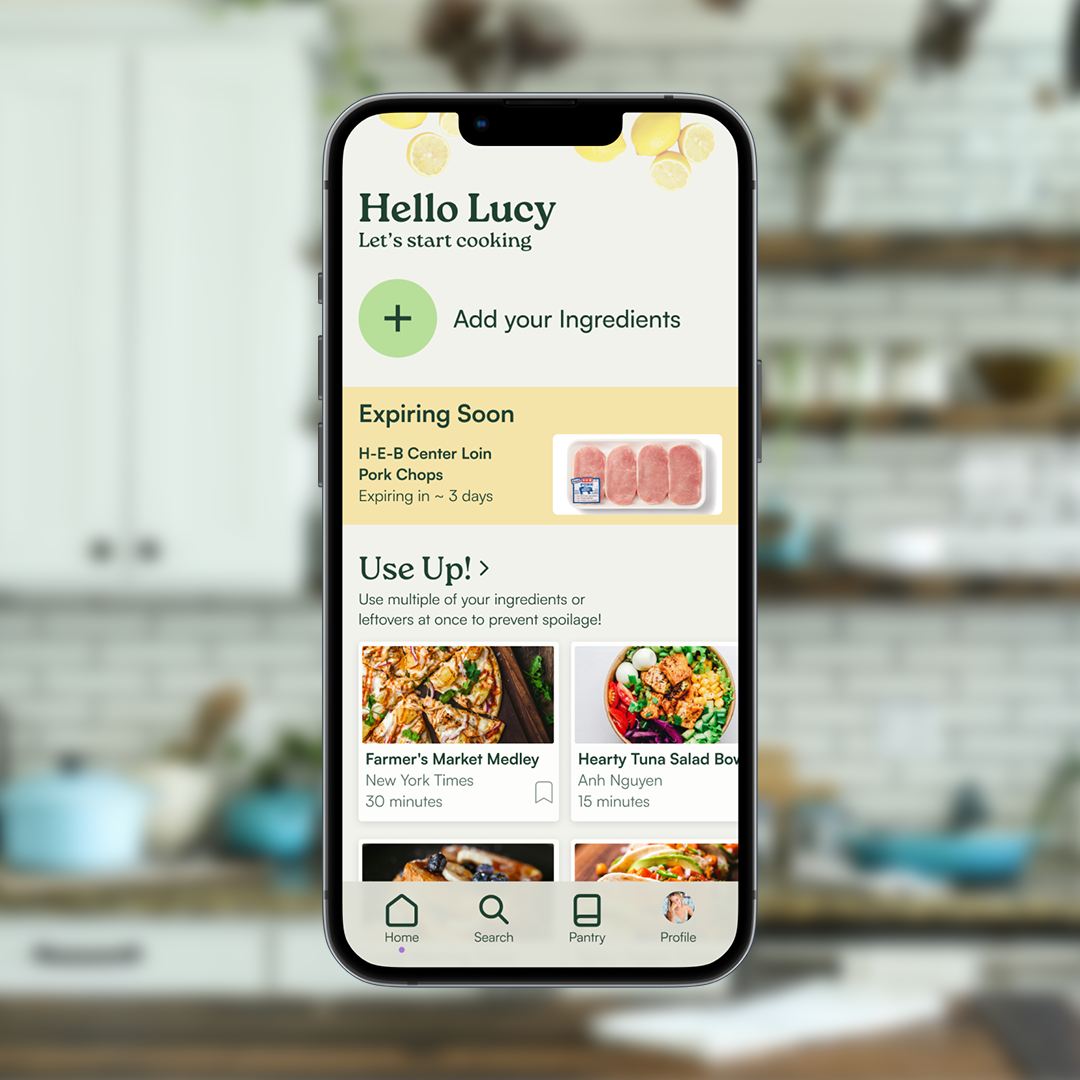
See what's expiring soon
Get a focused view of items that need to be used, not everything at once.
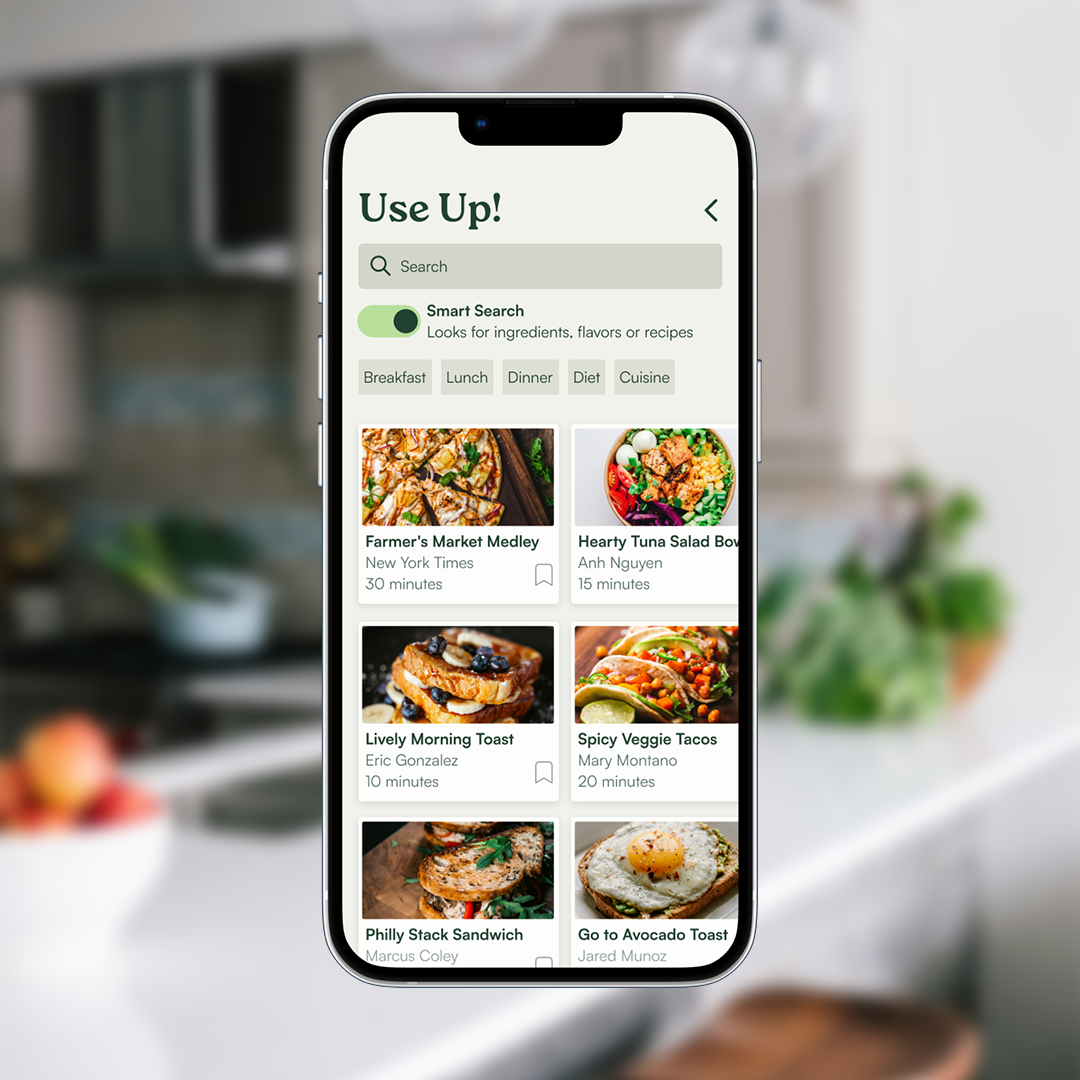
Find recipes that match your pantry
Smart search suggests recipes using your near-spoilage ingredients first and optimizes for flavor profiles and specific ingredients.
research
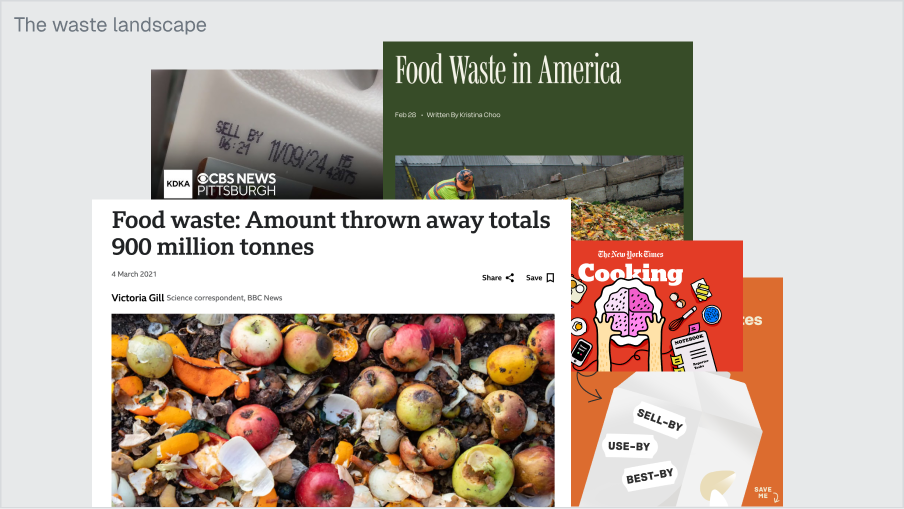
Understanding the root cause of food waste
We combined desk research with surveys and interviews to validate the problem space.
Key Findings
The data surfaced three consistent patterns across all participants.
Busy lifestyles dominate
80% of users cooked 2–5 times per week. 90% did not plan meals in advance.
Forgetfulness is the enemy
"I usually search for recipes online. Sometimes it's hard to find something that uses ingredients I already have." (L.G.)
Manual systems fail
"I tried a meal planning app, but it required a lot of manual entry. The time requirement ruined it for me." (E.C.)
our conclusion
Build a system that supports smart pantry tracking and showcases recipes users already have on hand
People aren't going to change habits like meal planning. We need to work within their existing behavior: cooking when they feel like it, not on a schedule.
prototype & testing
Exploring interaction models & chatbot implementation
We tested different approaches to AI integration to understand what felt intuitive and trustworthy.
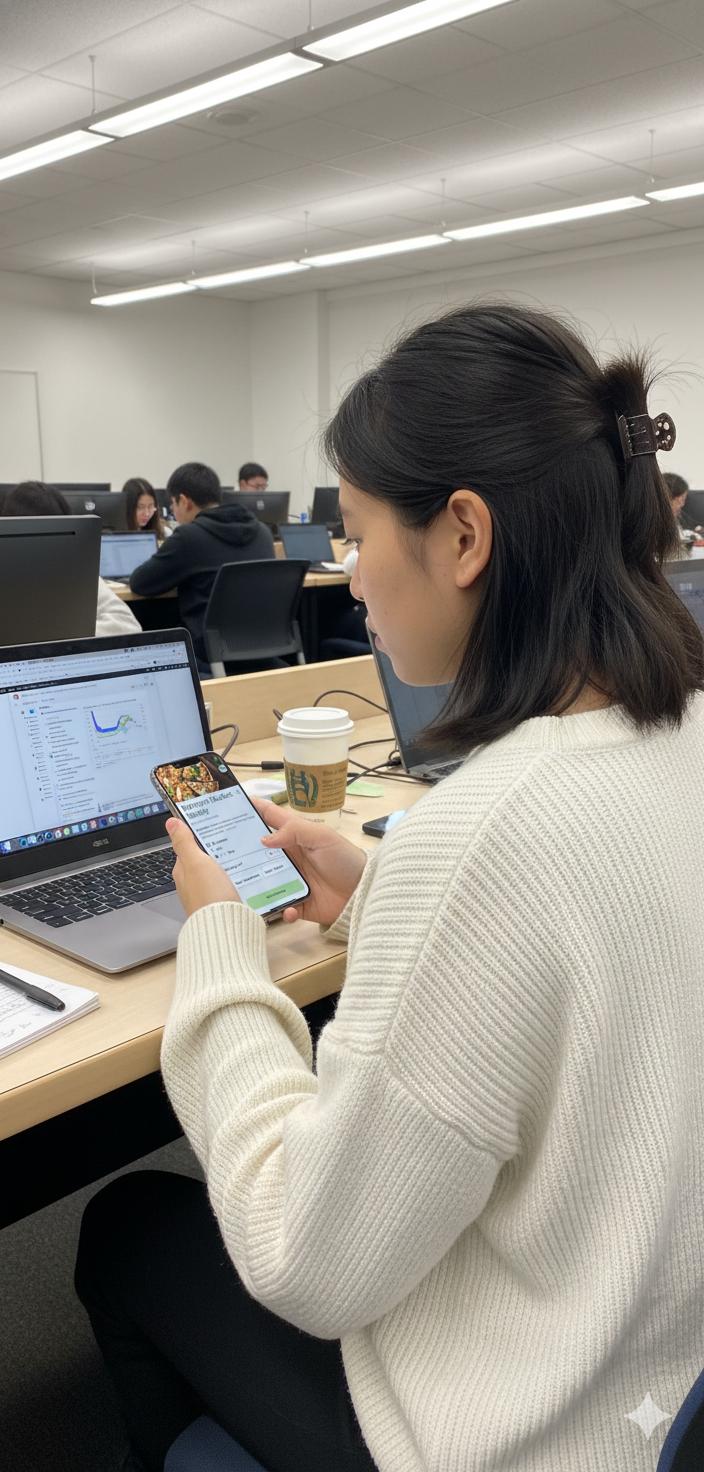

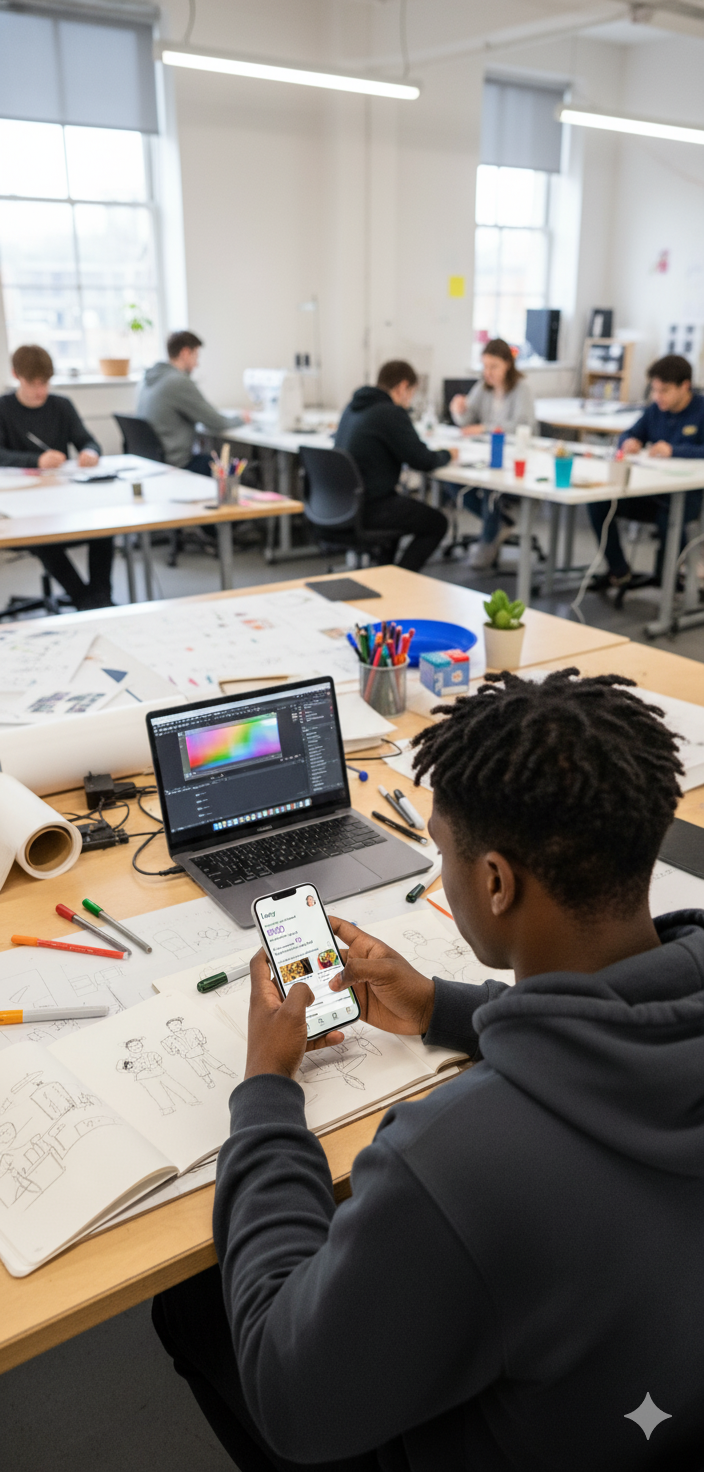
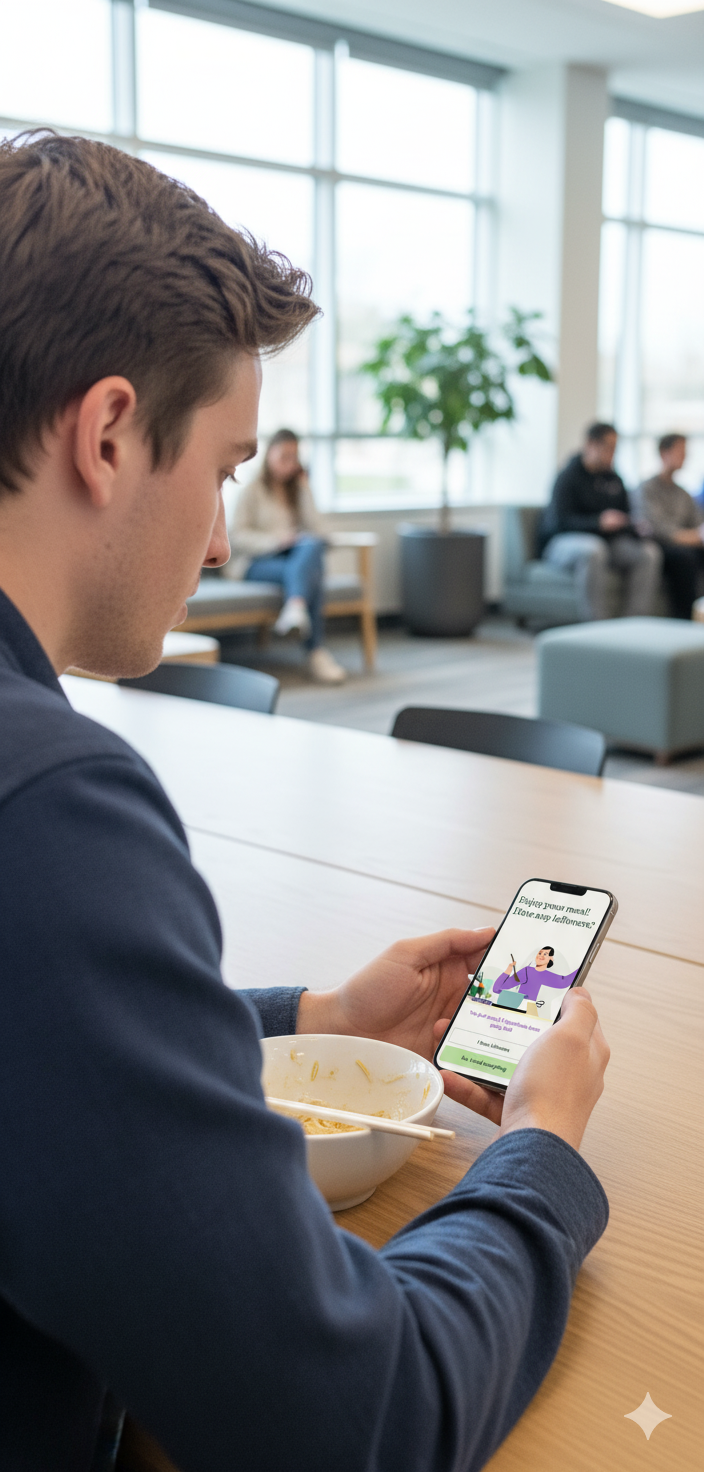
ai implementation
Chatbots were not the answer. Users really struggled with the mental model at the time
Our initial hypothesis was that users would be able to prompt the AI to help narrow down what they could cook, but at the time AI was very new to the general public. We were asking users who didn't know what they wanted to explain what they wanted so the LLM could push recipes. It was a flawed hypothesis that hurt the project.
Quite frankly, I already don't know what I want to cook. I can't magically explain what I'm looking for to the AI.
JC
Student @ Texas State University
moving forward
We still believed AI could be really impactful here, but we needed a different interaction model
We explored other types of AI enablement including classifier models to aid in search rather than relying on transformer models that required a lot of work on the user's part.
design decisions
We went back and adjusted our design with a new model
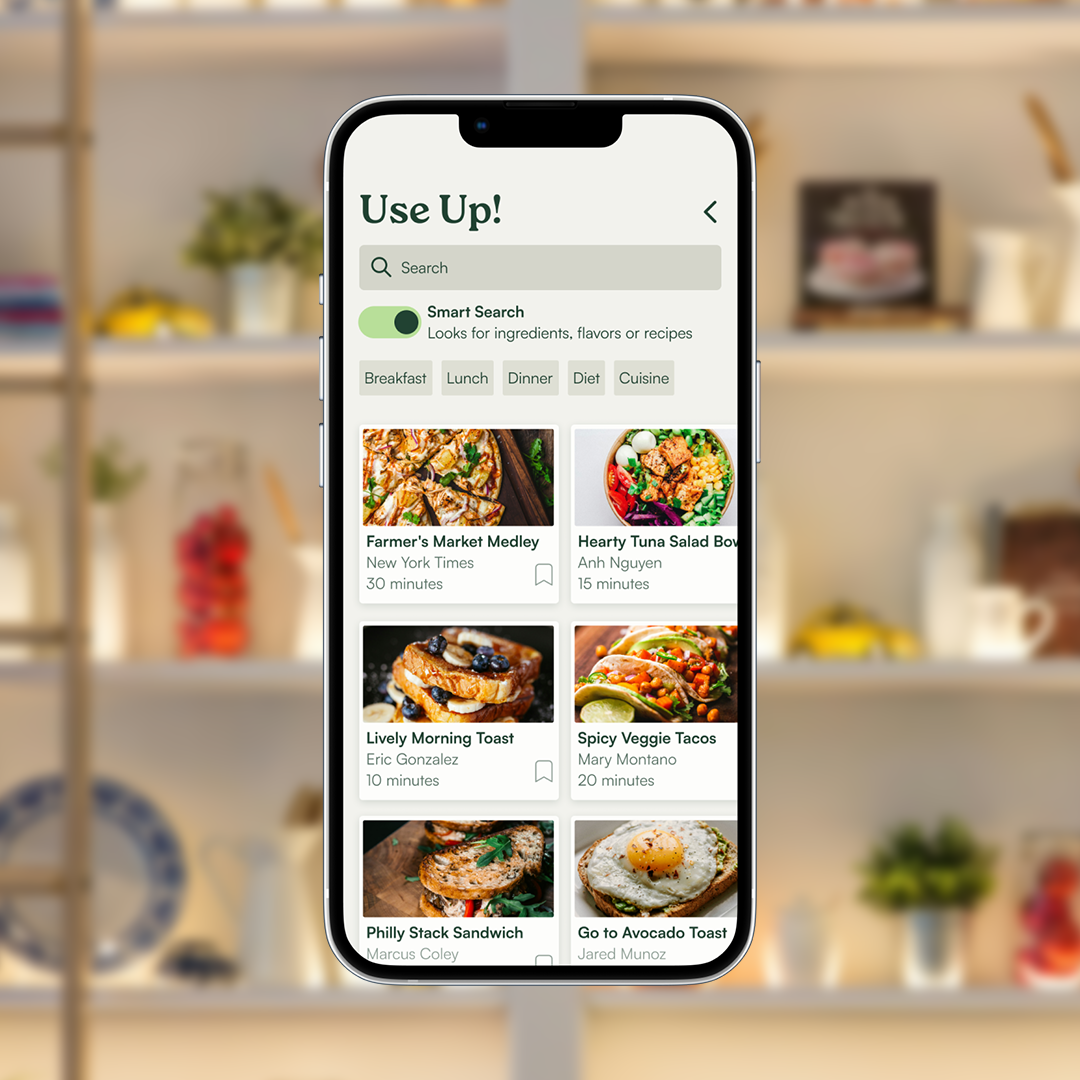
LLM smart search
We refined the AI interaction model beyond chat interfaces to reduce cognitive load and build user confidence.
Focused “expiring soon” section
Homepage shows only items spoiling in the next few days, not the entire pantry at once.
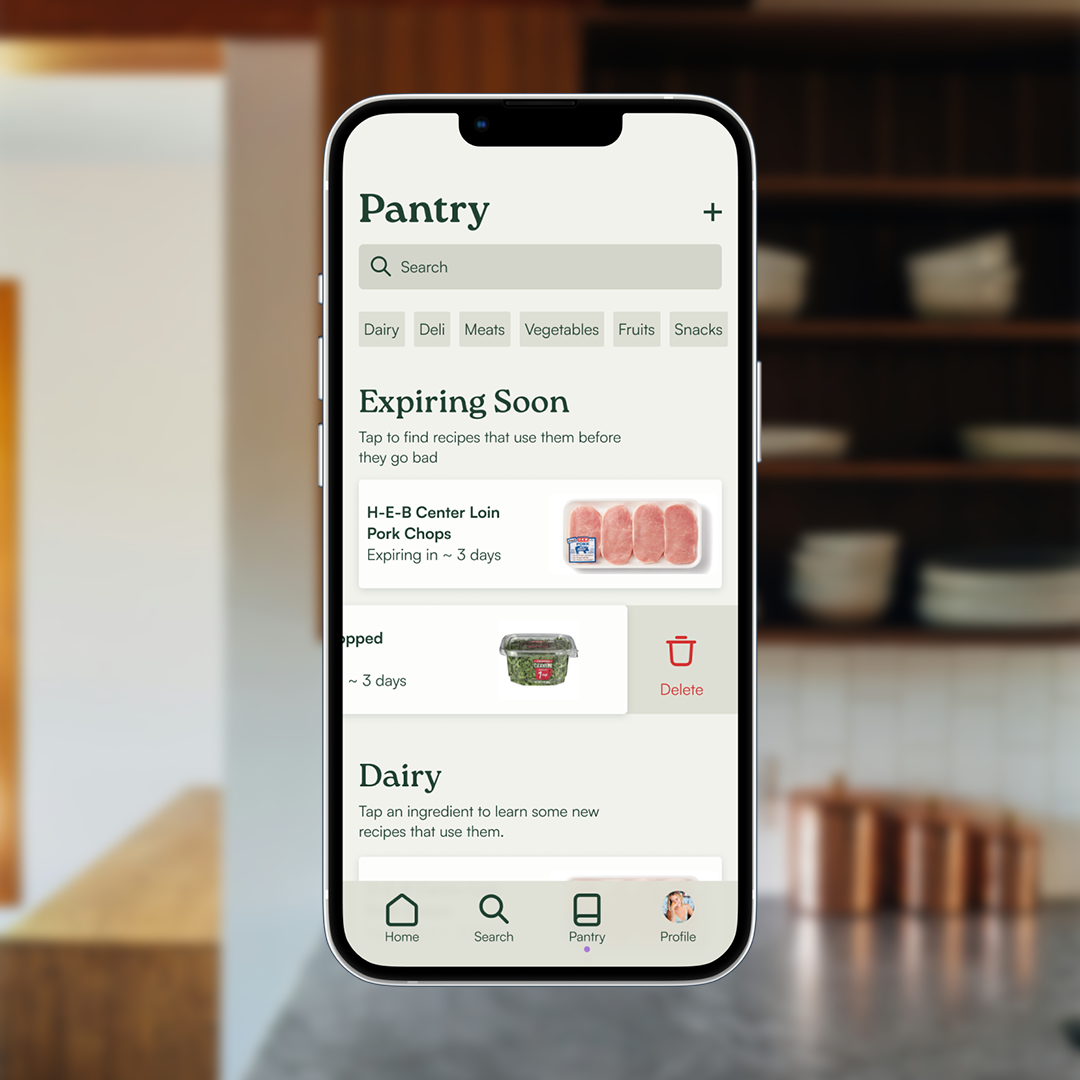
On-demand full inventory
Complete pantry remains accessible but doesn't overwhelm users on entry.
reflection
Real talk: what I learned
AI requires the right mental model.
Our first prototype used a conversational interface for meal planning. It seemed intuitive. Users hated it.
The issue was the interaction model. Users who didn't know what to cook couldn't formulate good prompts. The chatbot required knowing what you wanted, but users came precisely because they didn't.
We pivoted to familiar UI patterns: search, filters, toggles. The AI moved to the backend, working invisibly. Users finally got it. Same technology, different model.
Keep the interface deterministic, even when the backend isn't. Wrapping AI in familiar patterns reduced cognitive load and built trust. Users don't need to see the AI to benefit from it.
Fail early, pivot fast. Catching this friction early saved the project. User research isn't just validation. It's discovering when your assumptions are wrong before it's too late.